
A Free Hearing Test or One That Sells Hearing Aids: Choosing a Clinic
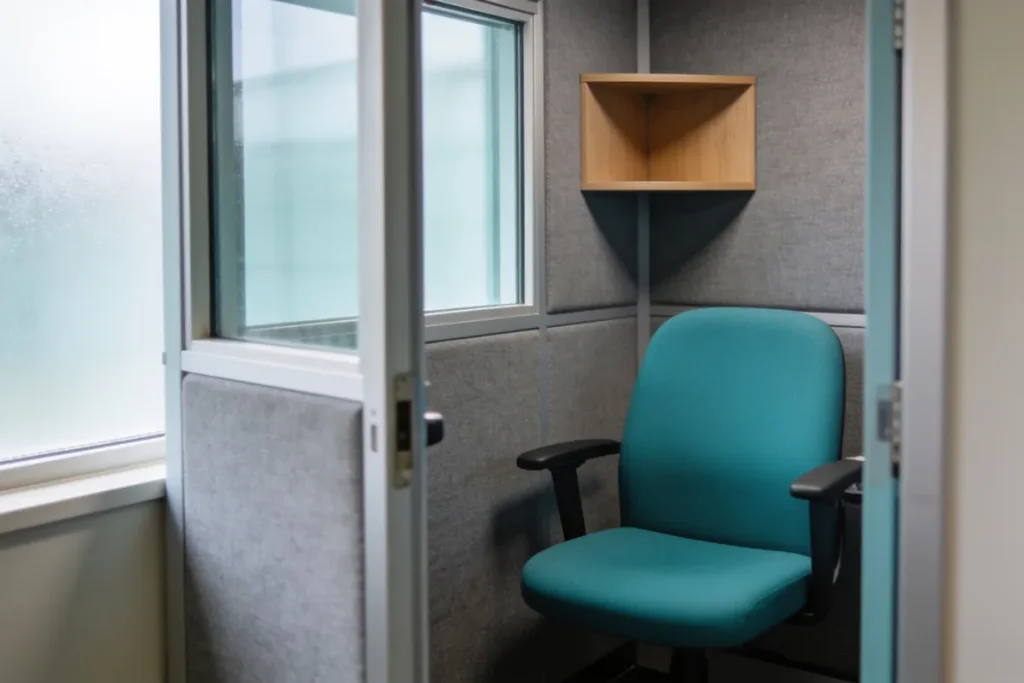
Signs offering a free hearing test are a familiar sight in Australian shopping centres, sometimes with a staff member standing at the entrance to invite passers-by inside. Many people who accept the offer, and many adult children who accompany a parent, suspect that the test is the first step towards the sale of hearing aids. The suspicion is reasonable. A free test does not, by itself, indicate poor practice, but it is frequently the opening of a commercial conversation, and the devices that may follow it are a considerable expense.
Two questions should be settled before that conversation begins. The first is whether the Australian Government already funds the person’s hearing services, in which case the test, the fitting and certain devices may be available through a government program rather than on private terms. The second is who is conducting the test, and what qualification that person holds. This guide addresses both, sets out the questions that distinguish a hearing assessment from a sales appointment, and identifies the circumstances in which a general practitioner should be seen first. It is general information and is not medical advice.
The Hearing Services Program
The Hearing Services Program is administered by the Department of Health, Disability and Ageing. Under its voucher scheme, eligible people can receive hearing services from a contracted provider at no cost or at reduced cost. Eligibility depends on several conditions, all of which are set by the department.
A person is eligible for a voucher if that person is an Australian citizen or permanent resident, or a resident of Norfolk Island, is aged 21 or over, and falls within one of the following groups:
- the holder of a Pensioner Concession Card, or the spouse of a holder
- the holder of a Veteran Gold Card, or the spouse of a holder
- the holder of a Veteran White Card issued for hearing-specific conditions, or the spouse of a holder
- a member of the Australian Defence Force
- a person referred to the program by an Inclusive Employment Australia provider
A Commonwealth Seniors Health Card does not, of itself, confer eligibility. This point is a frequent source of confusion, because the card is widely held by older Australians who are not pensioners, and a holder may reasonably assume that it opens the same doors as a pension card. It does not.

A voucher, once issued, lasts for five years. A person who expects to need services within that period should therefore apply before committing to private arrangements, since the voucher may cover the assessment and the fitting that a private clinic would otherwise charge for.
People under the age of 26 are generally served through a different stream of the program, the Community Service Obligations stream delivered through Hearing Australia. Families of children and young adults should make enquiries about that stream rather than the voucher scheme.
Fully or partly subsidised devices
Eligibility for the program does not mean that every device a clinic recommends will be free. Devices supplied under the program fall into two categories. Some are fully subsidised, which means the client pays nothing for the device itself. Others are partly subsidised, which means the client pays a top-up amount on top of the government contribution.
The distinction has practical consequences. A provider may recommend a device with additional features, and that device may carry a top-up charge that is not obvious at the time of the recommendation. Before agreeing to any device, a voucher holder should ask whether the recommended device is fully subsidised or partly subsidised, what the top-up amount is, and whether a fully subsidised device would meet the same clinical need. A provider should be able to answer each of these questions directly.
If you do not qualify
A person who falls outside the program’s eligibility groups may still be offered a free hearing test. In that case, the test may be free, but the devices are not. The cost of hearing aids purchased privately is borne by the purchaser, subject to any contribution available elsewhere.
Private health insurance with extras cover may contribute towards the cost of hearing aids, depending on the policy, and what a fund pays varies between funds and between policies. A person with extras cover should contact the fund before agreeing to a purchase and confirm what, if anything, the policy will pay.
Whatever the funding arrangement, two documents should be requested in writing at the conclusion of the test:
- The audiogram. This is the chart that records the results of the hearing assessment across a range of frequencies.
- The recommendation. This should state what the tester recommends, whether that is a device, a review at a later date or a referral elsewhere, and the reasons for it.
With both documents in hand, a person is in a position to seek a second opinion or a second quotation without repeating the assessment.
Audiologist or audiometrist
Two kinds of practitioner commonly conduct hearing assessments in Australia: audiologists and audiometrists. The training and scope of the two professions differ, and a person is entitled to ask which the tester is.
For the purposes of the Hearing Services Program, both audiologists and audiometrists may deliver services as qualified practitioners, provided that they are members of a recognised professional body. The department’s practitioner requirements identify the relevant bodies, which include Audiology Australia and the Australian College of Audiology, which incorporates HAASA.
As this guide understands the position, neither profession is overseen by a national registration board of the kind that registers doctors, dentists and optometrists. For that reason, membership of a recognised professional body is the check the program itself relies upon, and it is also the check a member of the public can most readily make. A person attending a clinic, whether under the program or privately, may reasonably ask:
- whether the tester is an audiologist or an audiometrist
- which professional body the tester belongs to
- whether the clinic is a contracted provider under the Hearing Services Program
Questions that separate a test from a sale
A hearing assessment and a sales appointment can take place in the same room on the same day. The following questions help a person determine which is taking place, and they are best asked before any device is discussed.
- Is the clinic owned by, or commercially tied to, a hearing aid manufacturer? A clinic connected to a manufacturer may recommend that manufacturer’s devices. The connection is not improper, but it is relevant to how a recommendation should be weighed.
- Will I receive a copy of my audiogram? The answer should be yes, without conditions.
- Is there a trial period, and what does a return cost? Trial arrangements differ. The question to settle is not only whether a trial exists, but what the person will pay if the device is returned within it.
- Is the price itemised? A quotation should separate the cost of the devices from the cost of fitting and any follow-up appointments, so that it can be compared against another provider’s quotation on equal terms.
- Can I take these results to another provider for a second quotation? A clinic confident in its recommendation should have no objection.
The pattern of a free or low-cost assessment followed by a product sale is not unique to hearing clinics. This site’s guide to booking an eye test with a Medicare optometrist examines the same pattern at the frame wall, and its guide on how to choose a dentist sets out a parallel series of questions that look beyond the advertisement.
A person who feels pressed to decide on the day may decline to do so. A recommendation that is sound on the day of the test will remain sound a week later, and the time can be used to obtain a second quotation or to confirm program eligibility.
When to see a GP first
Certain symptoms call for a medical assessment before any visit to a hearing clinic. A person experiencing any of the following should see a general practitioner first:
- sudden hearing loss
- pain in the ear
- discharge from the ear
- hearing loss in one ear only
These symptoms may have causes that a hearing test is not designed to identify or treat, and a GP can examine the ear, arrange further investigation or refer the person to a specialist where that is appropriate. A shopfront clinic is not the right first step in these circumstances, however convenient its location. This site’s guide to finding a bulk-billing GP explains how to establish the cost of that appointment before booking it.
Ask for the audiogram, then decide
A free hearing test can be a useful service, provided the person taking it understands what follows. The first step is to establish whether the Hearing Services Program applies: an Australian citizen or permanent resident aged 21 or over who holds a Pensioner Concession Card, a Veteran Gold Card or an eligible White Card, or who is the spouse of a holder, may be entitled to government-funded services through a voucher that lasts five years. A Commonwealth Seniors Health Card alone does not qualify.
The second step is to establish who is conducting the test and whether that person belongs to a recognised professional body. The third is to ask the questions set out above before discussing any device, and to leave with the audiogram and the written recommendation. With those documents, the person is free to compare, to seek a second opinion and to decide in their own time.
Sources: Eligibility for the Hearing Services Program, Department of Health, Disability and Ageing (https://www.health.gov.au/our-work/hearing-services-program/accessing/eligibility); Hearing Services Program practitioner requirements, Department of Health, Disability and Ageing (https://www.health.gov.au/our-work/hearing-services-program/providing-services/practitioner-requirements)