
Why a 35% Car Window Tint Can Fail the 35% Legal Limit, State by State
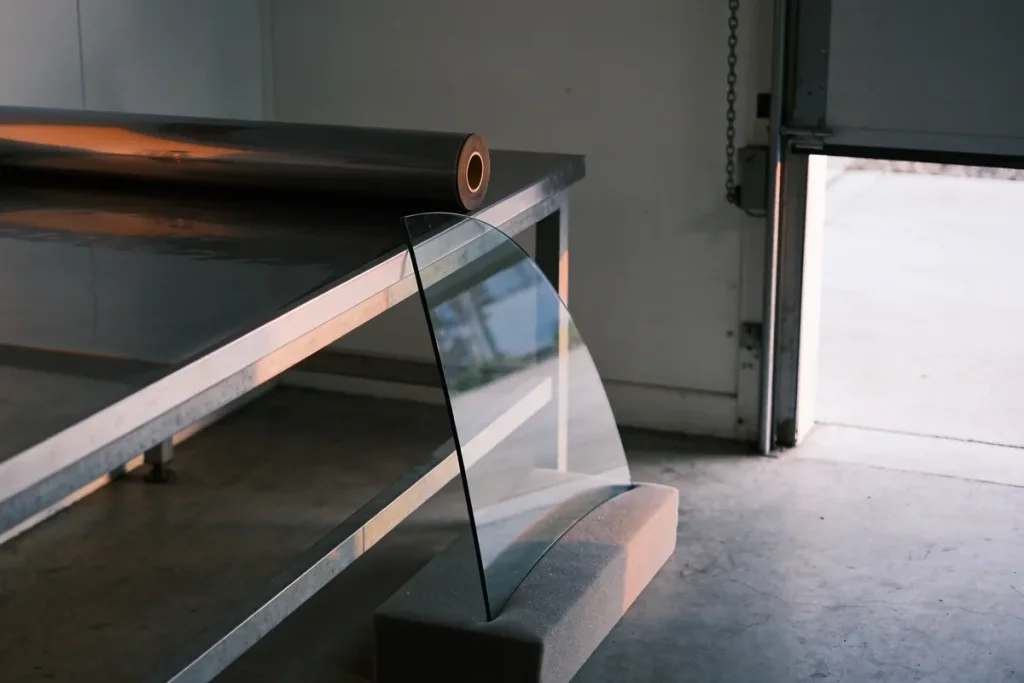
You walked into a tint shop, asked for the darkest legal tint, and someone pointed at a roll with “35%” on it. It sounds like the end of the question, and most people would take it that way. There is a catch, though. Road authorities around Australia measure the finished window, glass and film together, and almost every car leaves the factory with glass that is already a little tinted. So a 35% film on a typical front window comes out darker than 35%, which means it fails. The fix is simple enough: book a tinter who measures your bare glass first, chooses the film from that reading, and writes the finished reading for each window on your invoice. The helper below points you to your state’s row for each window and tells you what to ask the tinter when you check a quote.
What tint can my window take?
Pick your state, the window and the vehicle. You get the row of the state table that applies to you and what to ask the tinter.
Find your state's row in the table in this article, then ask the tinter to meter the bare glass and write the finished reading for each window on the invoice. The limit is always for glass and film together.
Enter the bare-glass reading and the film rating from the quote, as plain numbers.
Answer the questions and your summary will appear here.
Limits apply to the finished window, glass and film together, on light vehicles.
General information from state road authority guidance, not legal advice.
What the percentage means, and what actually gets measured
The number on a tint is its visible light transmission, usually shortened to VLT. It is the share of light that makes it through. A higher number lets more light in, so 70% is light and 20% is dark. If that feels back to front, you are in good company. Plenty of people assume a bigger number means a darker tint, and it is the opposite.
What matters for the law is where the measurement is taken. Western Australia’s Department of Transport puts it plainly: a 35% reading means 35% of the available light passes through both the window and the tint membrane together. Victoria, South Australia and the ACT word it differently, but the idea is the same. The law cares about the glass in your car as it is now, film and all. It has no interest in the film on its own roll.
That matters because your car’s glass is rarely clear to begin with. Most windscreens and front side windows have a light body tint built into the glass at the factory. South Australia’s guidance explains that this kind of glass is usually marked with the word TINTED, or with AS2 or AS3, somewhere in the small print near a corner of the pane. Factory privacy glass, the much darker glass on the rear of many SUVs and people movers, is often marked with a V. It is worth a look before you talk to anyone. South Australia’s guidance also makes the point directly, saying an installer must consider the existing body tint before applying any film.
The limits, state by state
These are the combined figures, glass and film together, for light passenger vehicles. One detail runs through most of them: the lower figure for windows behind the driver usually depends on the car having a rear-view mirror on each side. Most cars do, but if yours is older or modified, check before you go darker.
| State or territory | Driver and front passenger windows | Windows behind the driver | Windscreen |
|---|---|---|---|
| NSW | 35% | 20% | Top band only |
| VIC | 35% | 20% (mirror each side) | 70%, band only |
| QLD | 35% | 20% (mirror each side) | 70%, band only |
| WA | 35% | 20% (mirrors each side) | Band above the wipers, no more than 10% of the area |
| SA | 35% | 20% | 75% (cars built after 1971), band only |
| TAS | 35% | 20% (mirror each side) | Band only |
| ACT | 35% | 35% in the regulation; 20% in Access Canberra guidance | 70%, band only |
| NT | 35% | 15% | 75% (cars built after 1971), band only |
Reflectance is capped at 10% in the states that set a figure, and the Northern Territory asks for non-reflective film.
The NSW row is the one to double-check. It follows published summaries of the NSW regulation and the national model rules the other states use, not Transport for NSW’s own fact sheet, so if you live in NSW, check the current Transport for NSW fact sheet before you book.
The ACT needs a word of its own. The ACT regulation says 35% for every window other than the windscreen, while Access Canberra’s own page says 20% for the rear passenger windows and rear window. When the rule and the guidance disagree, the rule is the safer place to stand. Our view is to treat 35% as the ACT limit behind the driver too, unless Access Canberra confirms the 20% figure to you in writing. An email is enough, and it is a small thing to keep in the glovebox.
The sum, and why a “35% film” is not a legal tint
Film ratings are quoted as if the film were stuck to clear reference glass, which lets through roughly 88% of light. Your car’s glass lets through less than that, so the film’s rating flatters what you will end up with. One manufacturer’s data sheet shows the effect nicely: a film listed at 29% on clear glass comes out at about 25% on automotive glass that reads 75% on its own.
You can estimate the result with a short sum:
finished reading = bare-glass reading x film rating / 88
Try it with a common front window that reads 75% before tinting. Put a 35% film on it and you get 75 x 35 / 88, which is about 30%. That is under the 35% limit, so the window fails, even though the film says 35% on the box. In fact, a 35% film only lands on 35% if your glass is perfectly clear, and front glass almost never is.
Turn the sum around and you get the lightest film you need for each glass reading. This is the table worth saving to your phone.
| Bare-glass reading | Lightest film for a 35% front window | Bare-glass reading | Lightest film for a 20% window behind the driver | |
|---|---|---|---|---|
| 85% | 36% | 75% | 23.5% | |
| 80% | 38.5% | 50% (privacy glass) | 35% | |
| 75% | 41% | 40% | 44% | |
| 70% | 44% | 30% | 59% | |
| 20% or below | No film at all |
“Lightest” can sound odd here, so to put it plainly: you need a film with that rating or a higher one, never a lower one. These are estimates. Films vary, glass varies, and the reading a meter gives on your finished window is the one that counts. The sum is there to help you read a quote, not to replace the measurement.
Take a hypothetical Brisbane hatchback to see it work. Say the tinter meters the front windows at 78% and the rear privacy glass at 28%. For the fronts, 35 x 88 / 78 comes to about 39.5, so a 39.5% film or lighter keeps them legal. For the rear, 20 x 88 / 28 is about 63, so the film needs to be around 63% or lighter. A darker “20%” roll on that glass would leave the window reading about 6%, which is a long way under Queensland’s 20%. The car might look like plenty of others on the street, but it would fail if anyone put a meter on it.
Privacy glass and the clear-film myth
You will often hear that factory privacy glass “isn’t tint”, so putting film over it is no issue, or that a clear film can go on anything. Both ideas are understandable, and both can get you into trouble.
Victoria is the clearest on this. Transport Victoria says that if a factory-tinted window already has a VLT below the legal figure, you may not apply any film to it at all, and the ban expressly includes clear films. South Australia allows factory privacy glass below 20%, but says it must not be coated in a way that lowers its light transmission further. The Window Film Association of Australia and New Zealand, the industry body, puts the same point bluntly, saying you cannot legally apply film, even clear film, to privacy glass that is already at the 35%, 20% or 15% limit. In Western Australia, privacy glass below 20% is handled case by case through an exemption.
If you want a film for heat or UV on privacy glass, that is a fair thing to want. Ask the tinter to meter the glass first. If it already sits at or below your state’s figure, the honest answer is no film, and a good tinter will tell you that without being asked.
Windscreens, reflective film, and utes and vans
A windscreen can carry a tinted band across the top and nothing below it. In South Australia, Victoria and the ACT, the band can come down to whichever is greater of the top 10% of the windscreen or the line above the highest point the wipers sweep. Some guides say “whichever is less”, which is not what those rules say. Western Australia keeps the band above the wiper sweep and caps it at 10% of the windscreen’s area unless you have written permission. Wherever you live, no film below the band.
Reflective or mirrored film has its own limit. Reflectance is capped at 10% in the states that set a figure, and the Northern Territory asks for film that is non-reflective, with no distortion or bubbling. It is a separate number from darkness, so a film can be legally light and still fail for being too shiny.
Utes and vans are where the rules relax. Several states allow goods vehicles to go darker behind the driver, in some cases with no minimum at all, as long as a mirror is fitted on each side. The catch is the word goods. It depends on how the vehicle is classed on its compliance plate, not on whether it looks like a work vehicle. A dual-cab ute that is classed as a passenger vehicle may not qualify. Check the plate and your state’s rule before you go dark. If tint is one of several changes you are making, our guide to a logbook service versus an independent mechanic covers how modifications and servicing records fit together when you want the car to stay roadworthy.
Choosing a tinter: the five things to get in writing
A common view among drivers online is that they have run 20% all round for years and nobody has ever said a word. That is a fair point. Roadside checks can feel rare, and darker film really does cut glare and add privacy, which is why people want it. It is still worth knowing what the other side of that looks like. The industry body says illegal tint can lead to fines, a failed registration inspection, the cost of having the film removed, and insurance cancellation. If the tint earns a defect notice, the film has to come off, so you end up paying for the job twice. Some drivers also say that after a few winters of reversing in the dark, they would not go that dark again. As for insurance, check your policy’s terms on modifications, because that is where the answer for your car sits.
Another thing that comes up often is shops offering a darker film than is legal without being asked. You do not need to be suspicious about it. A clear request from you makes the job easy for any tinter, and these five lines on the quote and the invoice do most of the work:
- The bare-glass reading for each window, measured with a meter before any film goes on.
- The film product and its rating, so you can run the sum yourself.
- The finished reading for each window, measured after installation.
- A compliance label or certificate, if the business issues one.
- A warranty against bubbling and fading, with the length written down.
If a tinter is happy to put all five in writing, you have very likely found a good one. If you are starting your search, the car detailing businesses listed on The Local Directory are a good place to begin, and you can take this list with you when you call.
Tint to the reading, not the roll
The darkest legal tint is not a number on a roll of film. It is a reading taken through your car’s own glass with the film on, and the limit applies to that reading. A 35% film can fail a 35% limit because the glass behind it was never clear. Get your bare glass metered, choose the film from the table above or ask the tinter to do the sum with you, and leave with the finished reading for every window written on your invoice. Then you can enjoy the cooler car without a second thought when you pass a police car.
Sources: Window tinting, SA.GOV.AU (https://www.sa.gov.au/topics/driving-and-transport/vehicles/vehicle-standards-and-modifications/window-tinting); Window tinting, Transport Victoria (https://transport.vic.gov.au/road-and-active-transport/road-rules-and-safety/window-tinting); IB-119D Window Tinting, WA Department of Transport and Major Infrastructure (https://www.transport.wa.gov.au/getmedia/a83459f5-c409-4a57-8873-3901f2fc332b/LBU_VS_IB_119D.pdf)