
Booking an Eye Test: What Medicare Covers, and an Optometrist Who Is Not Just Selling Frames
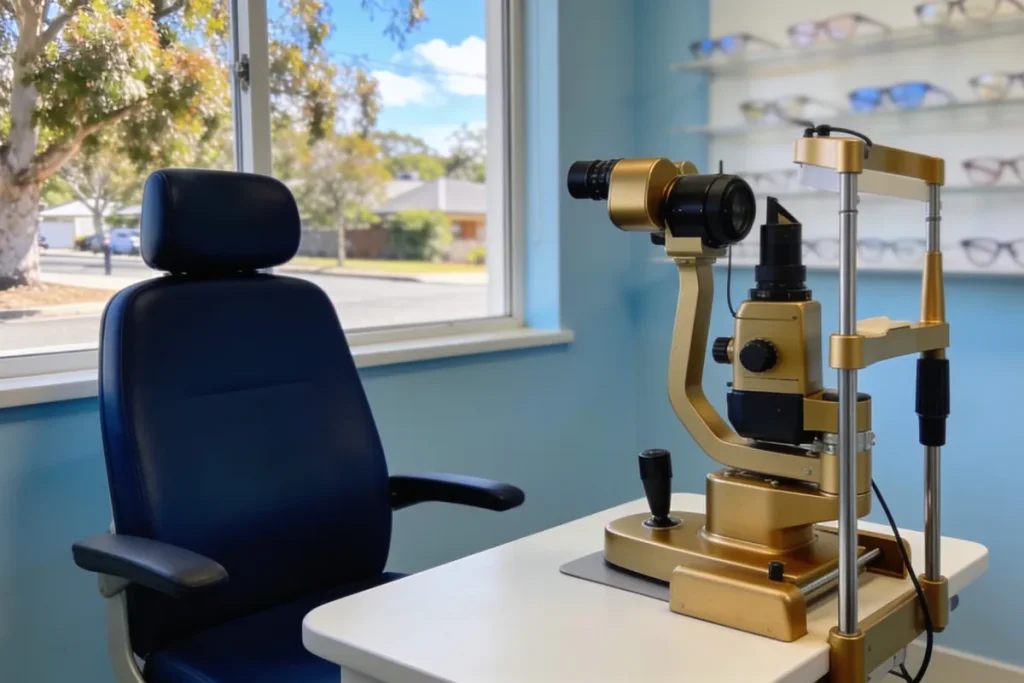
“Bulk billed eye test” is a common sign on Australian shopping strips. What it describes is narrower than many patients assume. Medicare pays a benefit towards the optometrist’s consultation. It does not pay for glasses, lenses or frames, and the cost that surprises people tends to arrive after the test, at the frame wall.
One rule matters more than any other for a patient who wants to keep the two apart. Under the notes to the Medicare Benefits Schedule, a spectacle or contact lens prescription becomes the patient’s property, and the patient may have it filled by anyone. This guide sets out what Medicare covers and how often, what a comprehensive test should include, how to judge an optometrist on the clinical work rather than the retail floor, and what to ask before buying frames. It is general information, not medical advice.
What Medicare covers, and how often
The Medicare Benefits Schedule (MBS) lists a separate item for each type of optometry consultation, and the interval between covered consultations depends on the patient’s age.
| Patient | MBS item | Covered interval | Note |
|---|---|---|---|
| Under 65 | 10910 | Once in 36 months | Comprehensive initial consultation |
| 65 and over | 10911 | Once in 12 months | Comprehensive initial consultation |
| Any age, qualifying condition | 10913 to 10915 | Earlier, where clinically needed | A qualifying ocular condition requires a further course of attention |
| Any age | 10916 | Per consultation | Brief consultation of 15 minutes or less |
Read in practice, an adult under 65 with no eye condition is covered for a comprehensive consultation once every three years. A patient aged 65 or over is covered once a year. Where a qualifying ocular condition means the eyes need to be reviewed sooner, items 10913 to 10915 allow an earlier consultation to be claimed. Short consultations of 15 minutes or less fall under item 10916, which is a different item from the comprehensive consultation.
The interval matters when booking. A patient who returns before the interval has passed, without a qualifying condition, may find that the comprehensive item does not apply to that visit. It is reasonable to ask the practice, when booking, which item it expects to use and whether a benefit will be payable.
Patients who have changed practices are the most likely to be caught by the interval, because the new practice has no record of the last test. Giving the approximate date of the previous comprehensive consultation at the time of booking allows the practice to identify the correct item before the appointment rather than after it.
Bulk billed or charged
An optometrist can bulk bill the consultation, in which case the patient has no out-of-pocket cost for it, or can charge a fee above the Medicare benefit. The MBS notes require that, where the fee exceeds the benefit, the optometrist tells the patient the amount of the benefit payable. In other words, a patient who is being charged a gap should be told how much of the fee Medicare will return.
The benefit for a given item is set by the schedule, not by the practice, so it does not change with the practice’s size or ownership. For the consultation itself, a comparison between two practices therefore comes down to two questions: does the practice bulk bill this consultation, and if it does not, how large is the gap? Both can be asked when booking.
Whatever the billing arrangement for the consultation, the products that follow are outside it:
- spectacle lenses
- frames
- contact lenses
Medicare does not cover any of these. Private health insurance with extras cover may pay part of the cost of glasses or contact lenses, depending on the policy, and a patient with extras cover should check the policy’s limits before choosing.
The prescription is yours
The MBS notes to the optometry items deal directly with the prescription. A spectacle or contact lens prescription becomes the property of the patient. It should be made available to the patient at the completion of the prescription and fitting process, and the patient may have it dispensed by any person they choose. The optometrist must make the patient aware of this.
The practice that performs the test often also sells frames and lenses, and there is nothing improper in that arrangement. For a patient, though, this is the rule with the most practical effect, because it means the test does not commit anyone to buying from the same premises.
The rule applies to contact lens prescriptions as well as spectacle prescriptions. The wording “at the completion of the prescription and fitting process” is relevant to contact lenses in particular: where fitting continues after the first appointment, the prescription becomes available once that process is complete, and a patient can ask the practice when that point will be reached.
The practical step is simple: ask for a copy of the prescription before looking at frames. With the prescription in hand, the patient can compare the practice’s lens and frame prices with those of other suppliers, including online sellers, on equal terms.
Online sellers often ask for a pupillary distance measurement, the distance between the centres of the pupils. Whether that figure appears on a prescription varies. A patient who intends to buy elsewhere can ask whether it can be noted, while recognising that this is a request rather than an entitlement.
What a comprehensive test should include
A comprehensive eye test is a clinical examination, and its content can be described in a few parts:
- History. Questions about vision, symptoms, general health, medications and family eye history.
- Vision and refraction. Measuring how well each eye sees and determining any prescription needed.
- Eye health. Examining the front of the eye and the back of the eye, including the retina and optic nerve.
- Further tests where clinically justified. Measuring eye pressure or testing the visual field, for example. The MBS includes separate items for perimetry (visual field testing).
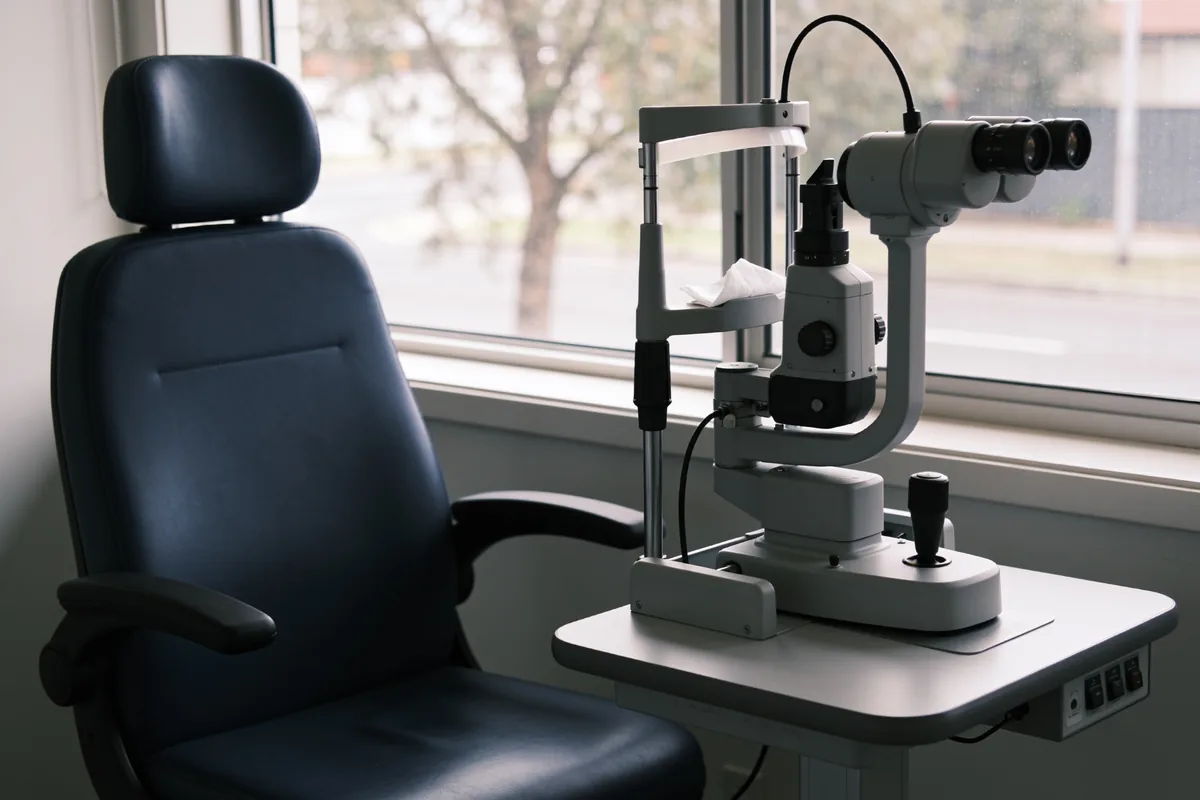
Further tests should follow from a clinical reason. They are justified by the patient’s history, age or findings, and the optometrist should be able to explain why one is being recommended. The MBS notes also address recall: reminders for re-examination are to be sent only where there is a clinical need. A patient who receives frequent reminders with no stated reason can ask what the clinical basis is.
A patient is rarely in a position to judge the clinical quality of an examination, but can observe its coverage. A test that moves from history to refraction and ends without any examination of eye health has covered two of the four parts above. The patient can ask, before leaving, whether the health of the eye was checked and what was found. A clear answer is itself a reasonable indicator of the care taken.
Choosing the optometrist
Optometrists are registered health practitioners, and registration can be checked on the Ahpra public register of practitioners. The check takes a few minutes and confirms that the person performing the test holds current registration.
Beyond registration, the more informative measures are observable at the appointment. Whether the practice is independent or part of a chain is less important than the following:
| Measure | What to look for |
|---|---|
| Time spent | A consultation that covers each part of the test above, rather than refraction alone |
| Explanation | Findings explained in plain terms, including what was checked and what was normal |
| The prescription | Offered at the end of the process without the patient having to ask |
| Recommendations | Further tests or reviews explained by reference to a clinical reason |
Some patients need a different review interval from the standard one. Children, people with diabetes and people aged 65 and over are among the groups for whom the timing of reviews can differ, and the optometrist can advise on the appropriate interval.
Continuity has a value of its own. A practice that holds the record of earlier tests can compare each new set of findings against the last, and a change between two examinations often says more than a single result viewed alone. For that reason, a patient who finds an optometrist who meets the measures above has a good reason to return to the same practice for the next covered consultation, whatever the patient later decides about where to buy glasses.
The habit of checking billing before the appointment is the same one set out in this site’s guide to finding a bulk-billing GP, and a parallel set of checks for dental care is covered in the guide on how to choose a dentist.
At the frame wall
The test ends with a prescription. The sale, if there is one, is a separate decision, and three steps keep it that way:
- Ask for the lens price separately from the frame price. Lens options, such as coatings or thinner materials, can add to the total, and a frame ticket alone does not show them.
- Before committing, ask for the full amount, including lenses and any options, in writing.
- Remember that leaving is an option. The prescription is the patient’s property. A patient who is not satisfied with the price can take it and buy elsewhere.
Comparison is straightforward once the prescription is in hand. The same prescription, with the same lens options, can be priced at more than one supplier, and the patient can then weigh price against service, fitting and any adjustments offered after purchase.
Offers that bundle a frame and lenses into one price are not necessarily poor value. A bundled price is, however, harder to compare, because the lens specification inside it is not always stated. Asking what lenses the bundle includes, and what each upgrade adds, turns the offer back into separate lines that can be set against another supplier’s quote.
The test is the appointment, the frames are optional
Medicare covers the optometry consultation: a comprehensive consultation once in 36 months for patients under 65, once in 12 months for those 65 and over, and earlier where a qualifying condition requires it. It does not cover lenses, frames or contact lenses. Where an optometrist charges more than the benefit, the MBS requires the patient to be told what the benefit is.
The prescription that comes out of the test belongs to the patient and may be filled anywhere. An optometrist worth returning to will examine the whole eye, explain the findings, recommend further tests only for a clinical reason and offer the prescription without being asked. With those conditions met, the frames become one purchasing decision among several, made on the patient’s own terms.
Sources: Medicare Benefits Schedule, Item 10910 and optometry notes (https://www9.health.gov.au/mbs/fullDisplay.cfm?type=item&q=10910); Ahpra, Register of practitioners (https://www.ahpra.gov.au/Registration/Registers-of-Practitioners.aspx)